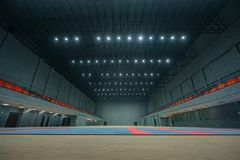
Tennis Tournaments
Why Indoor Events Are Built Inside Arenas
Late-season indoor tennis is staged in multi-purpose arenas, which means installing courts, lighting and seating over a concrete floor and removing everything within days of the final.
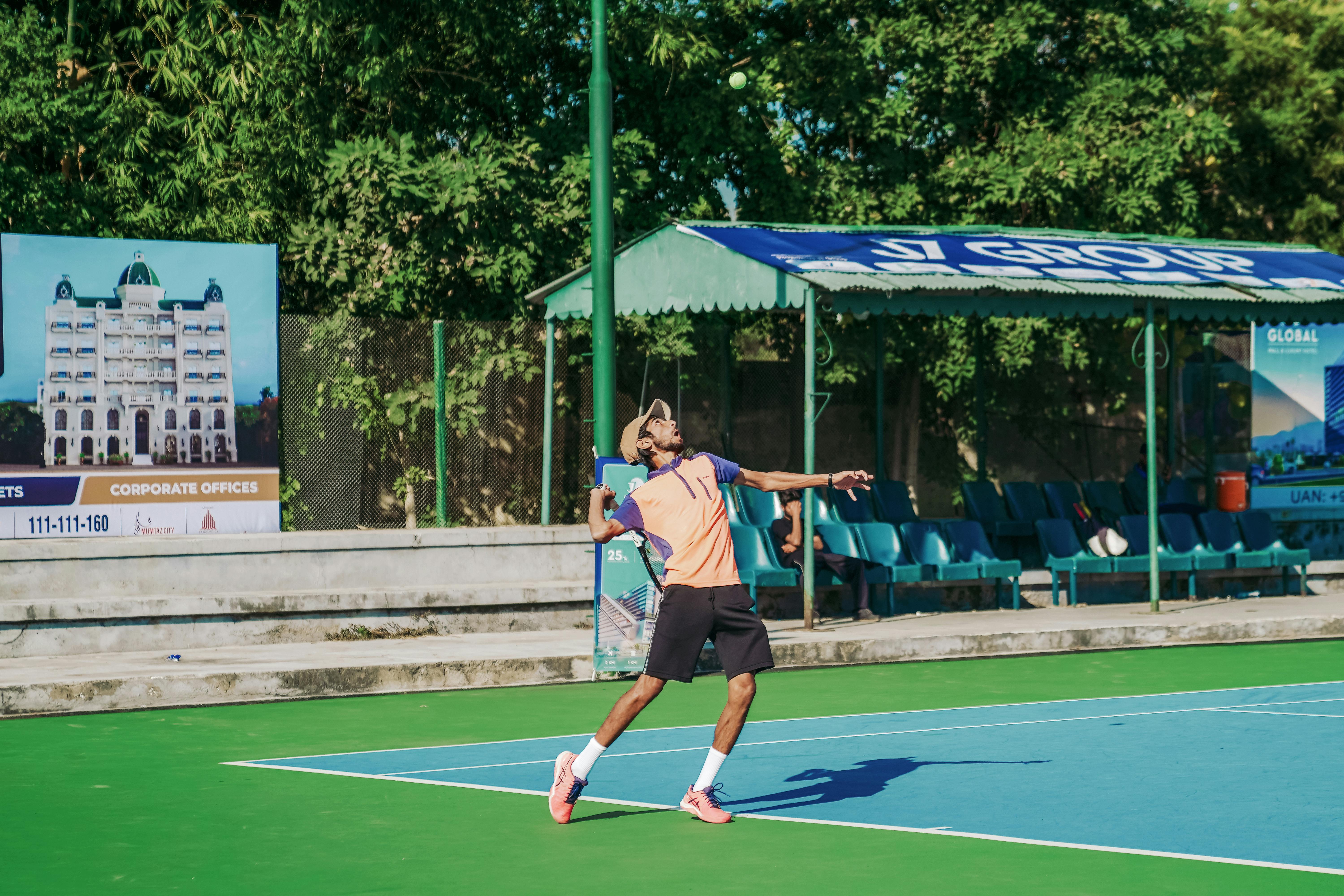
Indoor tennis events are rarely held in tennis venues. They are built inside arenas designed for concerts and other sports, and the tournament is an overlay erected for a week.
The arena provides a floor, not a court
The venue supplies a flat concrete slab, power, seating bowl and roof. Everything specific to tennis is installed by the tournament and removed afterwards.
Court surfaces are laid as cushioned systems over the slab, built up in layers and cured to a specified hardness before play, which takes days rather than hours.
Because the surface is installed rather than permanent, its speed characteristics can be specified, which is why indoor conditions vary noticeably between events.
Lighting has to be rebuilt for the sport
Arena lighting is designed for a different geometry, so tournaments rig their own arrays to achieve even illumination without glare in the players' sightlines.
Broadcast requirements set the level and the flicker characteristics, and the rig must avoid shadows across the baselines where ball tracking cameras operate.
The rigging load hangs from the arena roof, so the structural capacity of the venue's grid is checked during selection rather than after booking.
Seating is reconfigured around the court
The permanent bowl is supplemented with temporary floor seating placed to the court's sightlines, and sections of the bowl are closed where views are poor.
Player boxes, officials' positions, camera platforms and hospitality all occupy floor space, and each removes seats from the highest-value part of the room.
Practice courts present a separate problem, since the arena rarely has room for them and they are often installed in an adjacent hall or a nearby facility.
Build and derig are scheduled to the day
Arenas are booked continuously, so the tournament receives the building for a defined period and must complete installation, the event and removal inside it.
Court laying is the critical path because the surface needs curing time, which cannot be compressed regardless of how much labour is applied.
Derig begins immediately after the final, often overnight, because the next tenant's build starts the following morning under a separate contract.
Climate control affects play directly
Air handling in a full arena has to remove heat generated by lighting and spectators without producing airflow across the court that moves the ball.
Humidity affects string tension and ball behaviour, so tournaments monitor conditions and adjust the system through sessions rather than setting it once.
These controllable conditions are the reason indoor events produce consistent play from first round to final, which is a genuine competitive difference from outdoor tournaments.
Also by Alison Mitchell
- Strategic line and length consistency in Modern Sports: A Tactical AnalysisInternational Cricket
- Strategic soil profiles in Modern Sports: A Tactical AnalysisInternational Cricket
- Strategic strike rate averages in Modern Sports: A Tactical AnalysisInternational Cricket
- Strategic line and length consistency in Modern Sports: A Tactical Analysis (Insights)International Cricket