NBA Basketball
Why Games Abroad Take A Year To Arrange
Staging a regular-season game overseas requires an arena conversion, freight, customs clearance, officiating travel and a schedule built around the trip, so planning starts a season ahead.

An overseas regular-season game is a single fixture that consumes a year of planning. The complexity comes from moving a broadcast-standard production into a building that is not equipped for it.
The venue must be converted to league specification
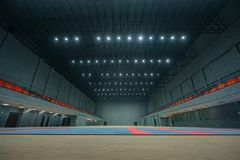
Arenas abroad are built for other sports, so the court, shot clocks, scoring systems, replay infrastructure and bench configuration are installed for the game and removed afterwards.
Court panels are shipped and assembled on site, since surface consistency is a competition requirement rather than a preference.
Lighting and camera positions are rebuilt to broadcast specification, which often means rigging from a roof grid not designed for that load.
Freight and customs drive the lead time
Equipment travels by sea where possible, which means shipping weeks in advance, with air freight reserved for time-critical or high-value items.
Customs clearance is arranged as temporary import, and controlled items such as medical supplies and communications equipment require separate permissions.
Because the shipment cannot be replaced locally, freight is insured and tracked, and contingency stock is held for the components most likely to fail.
The schedule has to absorb the trip
Teams travelling across several time zones need adjustment time before and recovery time after, so the fixture list is built around the trip rather than accommodating it afterwards.
Both participating teams are usually given a lighter surrounding schedule, which means the league is redistributing games for other teams as well.
Competitive fairness is scrutinised, so the trip is generally allocated to teams who volunteer or rotate, rather than imposed on contenders mid-season.
Officials, medical and operations all travel
Referees, statisticians, replay operators, medical staff and league operations personnel travel with the game, since the standard of officiating cannot be sourced locally.
Local hires cover stewarding, catering and building operations, and they are trained on league procedures in the days before the event.
Medical planning includes agreed hospital arrangements and clearance for team physicians to practise, which is a legal question in each jurisdiction.
Commercial activity is the reason it happens
The trip is built around a week of appearances, youth events, retail activity and broadcaster engagement, since a single game alone would not justify the cost.
Local broadcasters and sponsors are brought in around the fixture, and the league treats the week as market development rather than as a fixture relocation.
That framing is why the games are placed in markets with growth potential rather than in the cities most likely to fill an arena.
Also by Alison Mitchell
- Strategic line and length consistency in Modern Sports: A Tactical AnalysisInternational Cricket
- Strategic soil profiles in Modern Sports: A Tactical AnalysisInternational Cricket
- Strategic strike rate averages in Modern Sports: A Tactical AnalysisInternational Cricket
- Strategic line and length consistency in Modern Sports: A Tactical Analysis (Insights)International Cricket