Olympic Games
The venue problem and the long afterlife of a purpose-built stadium
The hardest question in hosting a multi-sport games is not how to build the venues but what happens to them once the fortnight ends and the temporary demand disappears entirely.
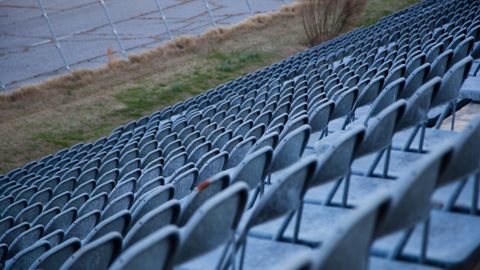
Why specialist venues are the difficult ones
A multi-sport games requires facilities for disciplines that have very small participation bases in most host countries outside the event itself. Building a permanent venue for such a discipline creates a facility whose ongoing demand is measured in a handful of users rather than a paying public. Operating costs continue regardless, since specialist surfaces, water systems and climate control require maintenance whether the venue is used or not.
The result is a facility that consumes public money indefinitely while serving a community too small to justify the expenditure on its own terms. This is the central venue problem, and it is entirely predictable at the planning stage if anybody chooses to model the demand honestly.
Temporary construction and what it saves
Building a venue designed to be dismantled removes the long-term operating burden completely, since nothing remains to maintain after the event. The approach costs more per seat during construction, because temporary structures require engineering that permanent ones amortise over decades. It also produces a venue that looks less impressive, which matters to hosts who regard the event partly as a demonstration of capability.
Against that, a dismantled venue leaves no visible failure, and the components can frequently be reused elsewhere or sold on. The reluctance to use temporary construction is therefore about presentation as much as about cost, which is worth stating plainly.
Conversion as the middle path
Some venues are designed with a reduced permanent capacity, using temporary upper tiers that are removed once the event has finished. This produces a facility sized for realistic local demand while still meeting the capacity requirement during the fortnight it must satisfy. Conversion works best where a credible tenant exists, since the reduced venue still needs a regular user to justify its continued operation.
Identifying that tenant before construction begins is the step most often skipped, and skipping it is what produces the well-known failures. Where the tenant is real, converted venues have proved to be among the more successful outcomes available to a host city.
What actually survives well
Transport infrastructure built for a games tends to outlast the event comfortably, because it serves demand that existed before and continues afterwards. Housing built as an athletes' village can be converted into residential accommodation, which is genuine value provided the location supports it. Utility upgrades, drainage and public space improvements are similarly durable, since they support the ordinary functioning of a city rather than a sport.
These elements are also the least visible parts of a hosting programme, which is why they are underweighted in the debate about whether hosting is worthwhile. A host that concentrates spending on this category and minimises specialist construction is making the choice the evidence supports.
Why bidding pushes the other way
A bidding process rewards ambition, because a bid promising striking venues and extensive new construction presents more impressively than a modest one. Existing infrastructure is the cheapest possible foundation for a bid, and a host that already possesses suitable venues faces a fraction of the cost. That advantage should make established sporting cities the natural hosts, though rotation between regions pulls in the opposite direction.
Rotation has real value in spreading participation and interest, and it also places the event in cities that must build almost everything. The tension between these two aims is permanent, and it explains why venue legacy remains an unresolved problem across successive editions.
- Specialist venues have almost no downstream demand
- Temporary and convertible designs cost more upfront and less later
- Existing infrastructure is the cheapest possible bid